

 Uncategorized
Some trips are built around checklists. The better ones are built around stories. Cultural & heritage tours in Sri Lanka offer that kind of experience – not just famous landmarks, but places that still feel lived in, sacred, and connected to everyday life.
For many international travelers, Sri Lanka is appealing because it gives you variety without forcing you into exhausting travel days. Within one well-planned journey, you can stand before ancient ruins in the morning, visit a temple by late afternoon, and wake up the next day to misty hills or a peaceful town with deep historical roots. That balance is what makes the island especially rewarding for travelers who want meaning as well as comfort.
Why cultural & heritage tours feel different here
Sri Lanka’s heritage is not locked behind museum glass. It is part of the landscape, woven into villages, religious sites, traditional arts, and historic cities that still welcome visitors with a living sense of place. You are not only seeing the remains of the past. You are moving through it.
That matters because cultural travel can sometimes feel distant in other destinations. You visit, read a plaque, take a photo, and leave. In Sri Lanka, the experience is often more layered. A sacred site may still be a place of worship. A historic city may sit alongside local markets and family homes. A cultural performance may reflect traditions that are still taught and practiced rather than recreated purely for visitors.
For first-time travelers, this creates a richer connection. For repeat visitors, it often becomes the reason to return and see more.
The heart of Sri Lanka’s cultural heritage tours
Most well-designed cultural heritage tours in Sri Lanka include a few key regions, each offering a different side of the island’s history.
Ancient cities that still inspire awe
Anuradhapura and Polonnaruwa are often central to a heritage-focused itinerary, and for good reason. These ancient capitals carry a remarkable sense of scale. Reservoirs, monasteries, stone carvings, royal remains, and sacred areas all hint at highly organized kingdoms that flourished many centuries ago.
Anuradhapura often feels deeply spiritual as well as historical. Polonnaruwa tends to impress travelers with its preserved ruins and graceful stonework. If you enjoy history with context, both are worth your time. If your schedule is shorter, choosing one over the other can still be rewarding, especially when paired with a guide who can explain what you are seeing in a clear and engaging way.
Sigiriya and the question of history versus scenery
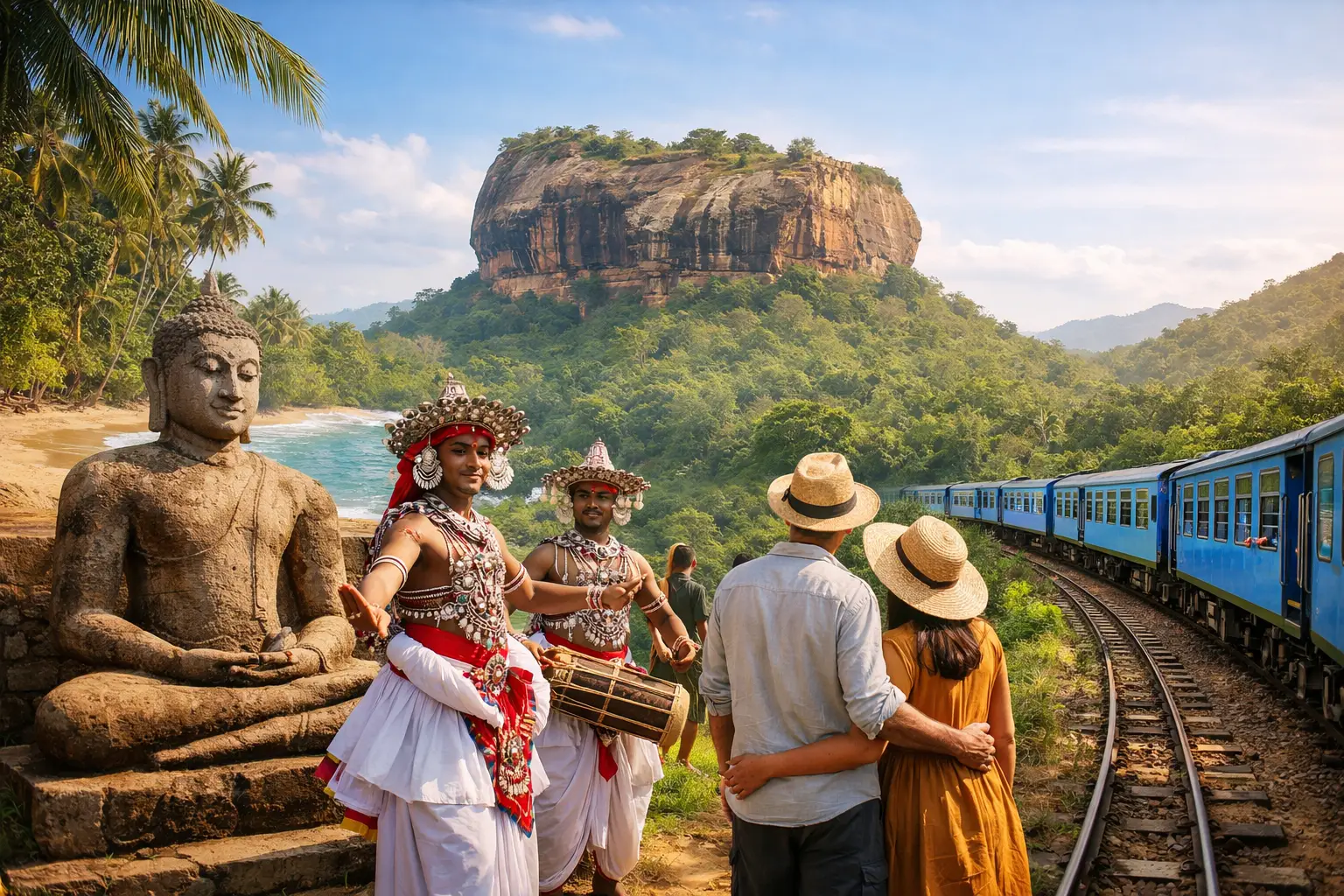
Sigiriya is one of the island’s best-known landmarks, and it earns that attention. Rising dramatically from the landscape, it offers a striking mix of royal history, engineering, and panoramic views. The climb is memorable, but it is not only about the view from the top. The site tells a story of ambition, design, and power.
That said, Sigiriya is also one of those places where expectations matter. Some travelers come for archaeology, others for photography, and many want both. If you prefer a slower heritage experience, it helps to balance Sigiriya with quieter historical sites nearby rather than treating it as a standalone stop.
Kandy as a living cultural center
Kandy brings a different atmosphere to cultural & heritage tours. It is not an ancient ruin site in the same way as Anuradhapura or Polonnaruwa. Instead, it feels alive, ceremonial, and deeply rooted in tradition. The city’s sacred temple setting, lakeside character, and cultural performances make it a natural bridge between history and present-day Sri Lankan identity.
This is where many travelers begin to feel the emotional side of the journey. The pace changes. The experience becomes less about grand ruins and more about understanding ritual, craftsmanship, and place. For couples and families especially, Kandy often adds warmth and variety to an itinerary.
What makes a heritage trip truly memorable
A strong itinerary is not only about what you include. It is also about how the journey flows.
Trying to cover every major historical site in a few days can leave you tired and disconnected from the places themselves. Cultural travel works best when there is room to absorb what you are seeing. A well-paced route with chauffeur-guided travel can make a real difference here. Instead of worrying about roads, timing, or local logistics, you can stay present and enjoy the experience.
This is especially valuable in Sri Lanka, where many travelers want to combine heritage with hill country, wildlife, or a short beach stay. That mix works beautifully, but only when the transitions are handled smoothly. A few days of ancient cities and temple visits followed by cooler mountain scenery or a scenic train journey often feels more balanced than a trip focused only on historical stops.
Cultural & heritage tours are not only for history lovers
One common misconception is that heritage travel only appeals to serious history enthusiasts. In reality, these tours suit a wide range of travelers.
Couples often enjoy them because the settings feel atmospheric and meaningful. Families appreciate the variety, especially when historic landmarks are paired with nature, train rides, or wildlife experiences. Solo travelers tend to value the structure and local insight that make unfamiliar places easier to understand. Even travelers who usually choose beaches or scenic escapes often find that cultural sites add depth to the overall vacation.
The key is personalization. Some guests want detailed historical explanation. Others prefer a lighter introduction with more time for photography, local food, and relaxed sightseeing. Neither approach is wrong. The best trips are shaped around your pace and interests.
How to plan cultural & heritage tours without feeling rushed
If this is your first visit to Sri Lanka, it helps to think in terms of regions rather than trying to fit the entire island into one trip. A classic cultural route might begin near the Cultural Triangle, continue to Kandy, and then extend into Nuwara Eliya or Ella for contrast. That gives you history, sacred sites, and a change of scenery without constant packing and long daily transfers.
Season, travel style, and energy level all matter. Families with children may prefer fewer hotel changes. Older travelers often benefit from more comfortable pacing and private transport. Honeymooners may want heritage experiences during the first half of the trip, followed by the coast for rest. These small decisions shape the quality of the whole journey.
It also helps to leave room for smaller moments. A roadside fruit stop, a traditional craft visit, a scenic viewpoint, or a quiet evening in the hills can be just as memorable as a headline attraction. Cultural travel is strongest when major landmarks and gentle local experiences sit side by side.
The value of local guidance
Heritage sites become more meaningful when someone can place them in context. Without that, even beautiful ruins can start to blur together. A knowledgeable local team helps you understand why a site matters, how to visit respectfully, and which combinations make the most sense based on your time.
This is where organized travel becomes especially helpful for international visitors. Sri Lanka is welcoming and rewarding, but planning a multi-stop itinerary independently can be time-consuming. Hotel selection, transfer timing, site order, and arrival support all affect how relaxed the trip feels. With the right coordination, cultural travel feels easy rather than demanding.
That is also why many travelers appreciate combining heritage with practical comforts. Reliable airport pickup, chauffeur-guided transport, thoughtful hotel choices, and direct communication during the trip create space for a more enjoyable experience. At Visit My Sri Lanka, this kind of support is designed to help guests focus on the island itself rather than the mechanics of moving through it.
Beyond monuments: the feeling you take home
The most lasting part of cultural & heritage tours is rarely a single photo or landmark. It is the feeling that a destination has opened itself to you in a more meaningful way. In Sri Lanka, that may come from standing among ancient stone structures at sunrise, hearing temple drums in Kandy, or watching the landscape change as you continue your journey into the hills.
A heritage trip does not need to feel academic or heavy. It can be comfortable, beautifully paced, and deeply enjoyable. What matters is that it gives you more than a surface impression. It lets you experience Sri Lanka as a place of memory, continuity, and living tradition.
If you want your holiday to feel rich in both beauty and meaning, cultural travel is one of the most rewarding ways to begin. Choose a route with breathing room, stay open to the quieter moments, and let the island tell its story one place at a time.


