

 Uncategorized
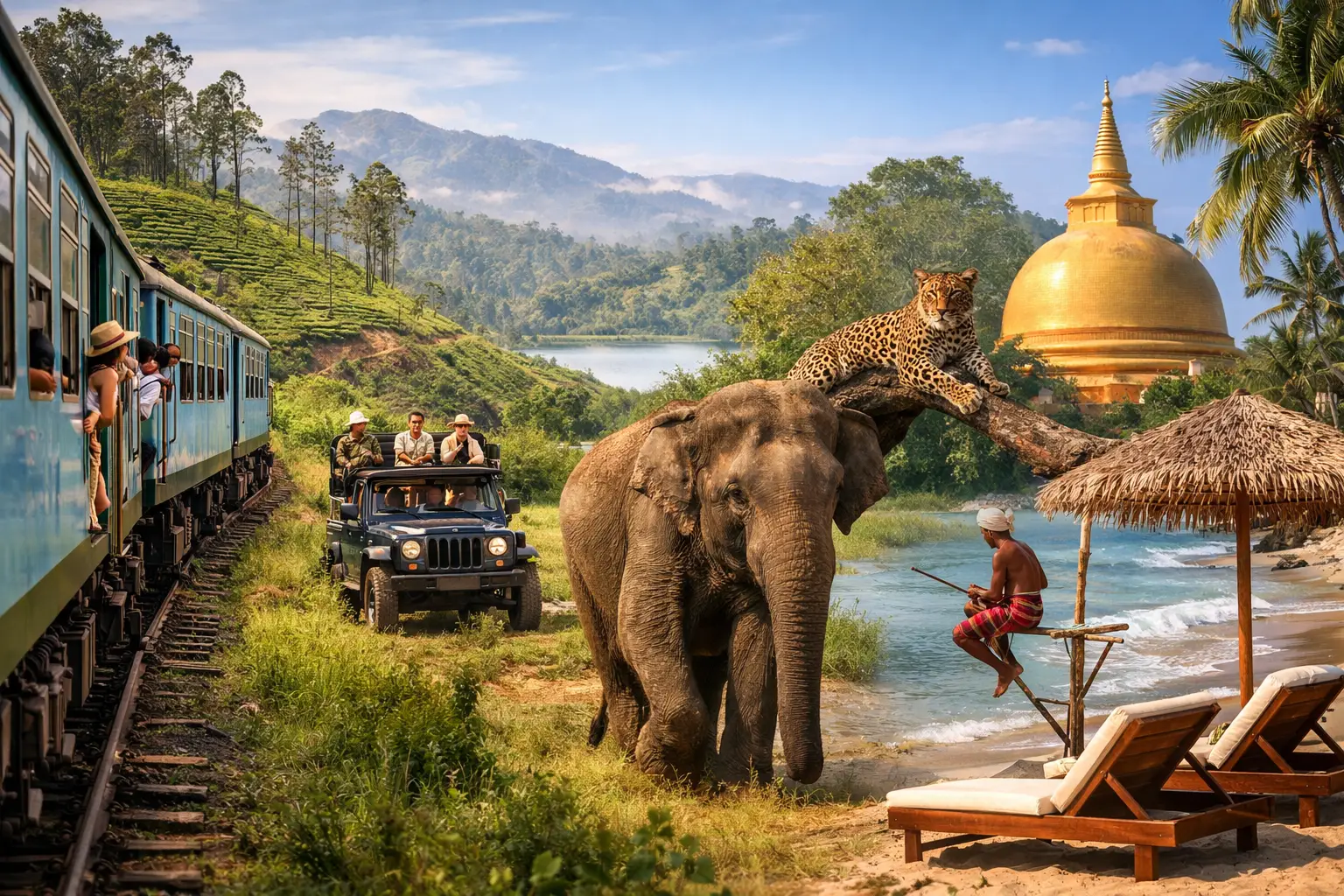
A jeep pauses beside a dusty track as the early light reaches the trees. Somewhere beyond the tall grass, an elephant shifts quietly, a peacock calls, and everyone in the vehicle waits with the kind of attention that makes a holiday feel wonderfully real. Wildlife safaris in Sri Lanka offer these unhurried moments alongside an island journey filled with beaches, heritage sites, tea country, and warm local hospitality.
Sri Lanka is compact enough to include a national park in a well-planned round tour, yet diverse enough that each safari area feels distinct. You may search for leopards in dry-zone forest, watch elephant families move across open plains, or spot waterbirds gathering near coastal lagoons. The best experience is not about rushing from one sighting to the next. It is about choosing the right park, traveling at a comfortable pace, and letting nature set the rhythm.
Why Wildlife Safaris in Sri Lanka Feel So Special
A Sri Lankan safari can be an easy and rewarding addition to a wider island itinerary. In only a few days, travelers can move from the ancient cities around Sigiriya to the cool hills of Ella, then continue south toward a wildlife park and the coast. This variety makes the country especially appealing for couples, families, small groups, and first-time visitors who want more than one kind of holiday.
The island’s parks protect very different landscapes. Dry forests, scrubland, reservoirs, wetlands, and grasslands all support their own mix of animals and birds. Elephants are among the most memorable residents, while deer, monkeys, crocodiles, water buffalo, colorful birdlife, and smaller creatures add depth to every drive. Leopards are a highlight for many guests, particularly in Yala, but they are wild animals and cannot be promised. A skilled guide improves the experience by reading tracks, calls, and movement in the landscape, while respecting the animal’s space.
There is also something refreshingly simple about a safari day. Early starts, open-sided jeeps, cool water, sun hats, and a camera ready at hand are often all that is needed. It is a chance to step away from schedules and notice the details: a kingfisher diving near a pond, a young elephant following its herd, or the changing color of the sky at sunset.
Choosing the Right National Park
The best park depends on your route, travel dates, interests, and the pace you prefer. A thoughtfully designed itinerary considers driving time as carefully as wildlife opportunities.
Yala National Park
Yala, in Sri Lanka’s southeast, is well known for its leopard habitat and dramatic dry-zone scenery. The park’s mix of forest, rocky outcrops, waterholes, and open areas creates a classic safari setting. It can suit travelers combining a safari with stays along the south coast, including Mirissa, Weligama, Galle, or Bentota.
Because Yala is popular, the experience can feel busier in certain areas and seasons. Guests who value a quieter atmosphere may prefer to focus on a relaxed drive, visit at a less crowded time where possible, or consider another park that fits their route. Wildlife viewing is always unpredictable, and that is part of its appeal.
Udawalawe National Park
Udawalawe is often an excellent choice for travelers hoping to see elephants in an open landscape. Its grasslands and reservoir edges can make animals easier to observe than in denser forest, while the park’s manageable size works well for families and those with limited time.
It is also conveniently placed for journeys between the hill country and the south. After the scenic train route from Nanu Oya to Ella, an overnight stay around Udawalawe can create a natural transition from misty tea estates to warmer safari country.
Wilpattu National Park
Wilpattu, on the northwest side of the island, offers a more forested safari setting. It is known for its natural lakes, called villus, which draw wildlife throughout the year. The park can be a lovely option for travelers exploring Anuradhapura, Negombo, or the Cultural Triangle who would like to add a nature-focused stay without traveling far south.
The forest here can make sightings feel more elusive, but that sense of discovery is part of Wilpattu’s character. Patience is especially rewarding, and bird lovers often appreciate the variety of habitats along the way.
Minneriya, Kaudulla, and Nearby Elephant Country
Around the Cultural Triangle, Minneriya and Kaudulla offer memorable opportunities to observe wild elephants. Seasonal water levels and food sources influence where herds gather, so the most suitable park can change during the year. Local guidance matters because conditions in nature are never fixed.
These parks are especially easy to pair with Sigiriya, Dambulla, Polonnaruwa, and Anuradhapura. For families or travelers who do not wish to include a long southern detour, this region can deliver a meaningful safari experience while keeping the journey balanced.
Timing Your Safari With Care
Safaris are generally scheduled in the early morning or late afternoon, when temperatures are more comfortable and many animals are active. Morning drives have a quiet, fresh quality, while afternoon drives often end in beautiful golden light. If your schedule allows, staying near the park for two nights may offer more flexibility than trying to fit a safari into a long transfer day.
Sri Lanka’s weather patterns vary by region, so there is no single month that is perfect for every park. Some parks may close temporarily for management or seasonal conditions, while rainfall can change road access, vegetation, and animal movement. Rather than planning around a guaranteed sighting, choose a route that makes sense for your overall holiday and treat the safari as a chance to experience the landscape as it is on that day.
For photographers, a morning safari may be preferable for softer light and cooler conditions. Families with young children may find a shorter afternoon drive more comfortable. Honeymooners may enjoy combining an early safari with an unhurried lodge breakfast and a restful evening afterward. The right choice is personal, and a good travel plan leaves room for that.
How to Enjoy a Respectful Safari
The finest safari memories come from watching wildlife without disturbing it. Your driver and tracker should keep a respectful distance, follow park rules, and avoid crowding animals. Never ask a guide to get closer than is safe or permitted, even when a photograph seems tempting. A calm animal and a quiet vehicle create a better experience for everyone.
Bring neutral-colored clothing, a hat, sunscreen, insect repellent, drinking water, and a light layer for the early morning. Closed shoes are practical for transfers and lodge grounds, although guests normally remain in the vehicle during the safari. A phone camera can capture wonderful moments, while a zoom lens is helpful for birds and distant animals. Avoid playing sounds, calling to animals, or leaving any litter behind.
It also helps to set expectations before the drive begins. A safari is not a checklist. Some days bring a spectacular close encounter; others are defined by smaller discoveries, such as a mongoose crossing the track or a painted stork gliding over the water. Both are part of the natural story of the park.
Building a Comfortable Sri Lanka Safari Itinerary
For international travelers, the practical details can make a wildlife holiday feel relaxed rather than rushed. A chauffeur-guided itinerary removes the need to navigate unfamiliar roads, arrange separate transfers, or coordinate park entry and jeep timing after a long journey. It also makes it easier to connect a safari with cultural sites, hill country stays, and beach time in one smooth route.
A classic journey might begin with airport arrival support and a night near Negombo, continue to Sigiriya and Kandy, then travel through Nuwara Eliya and Ella before reaching Udawalawe or Yala. Another route may combine Anuradhapura, Wilpattu, and the Cultural Triangle. Beach travelers can add a safari between coastal stays, while those with less time may choose elephant country near Sigiriya instead.
Visit My Sri Lanka can help shape these routes around your arrival time, preferred hotel style, group size, and travel pace. The goal is not to fill every hour. It is to arrange the right stays and journeys so you arrive at the park rested, enjoy the drive fully, and have time afterward to reflect on what you saw.
A well-planned safari leaves you with more than photographs. It gives you a morning of stillness, a deeper appreciation for Sri Lanka’s natural world, and a story that stays vivid long after the jeep has returned to the gate.

