

 Uncategorized
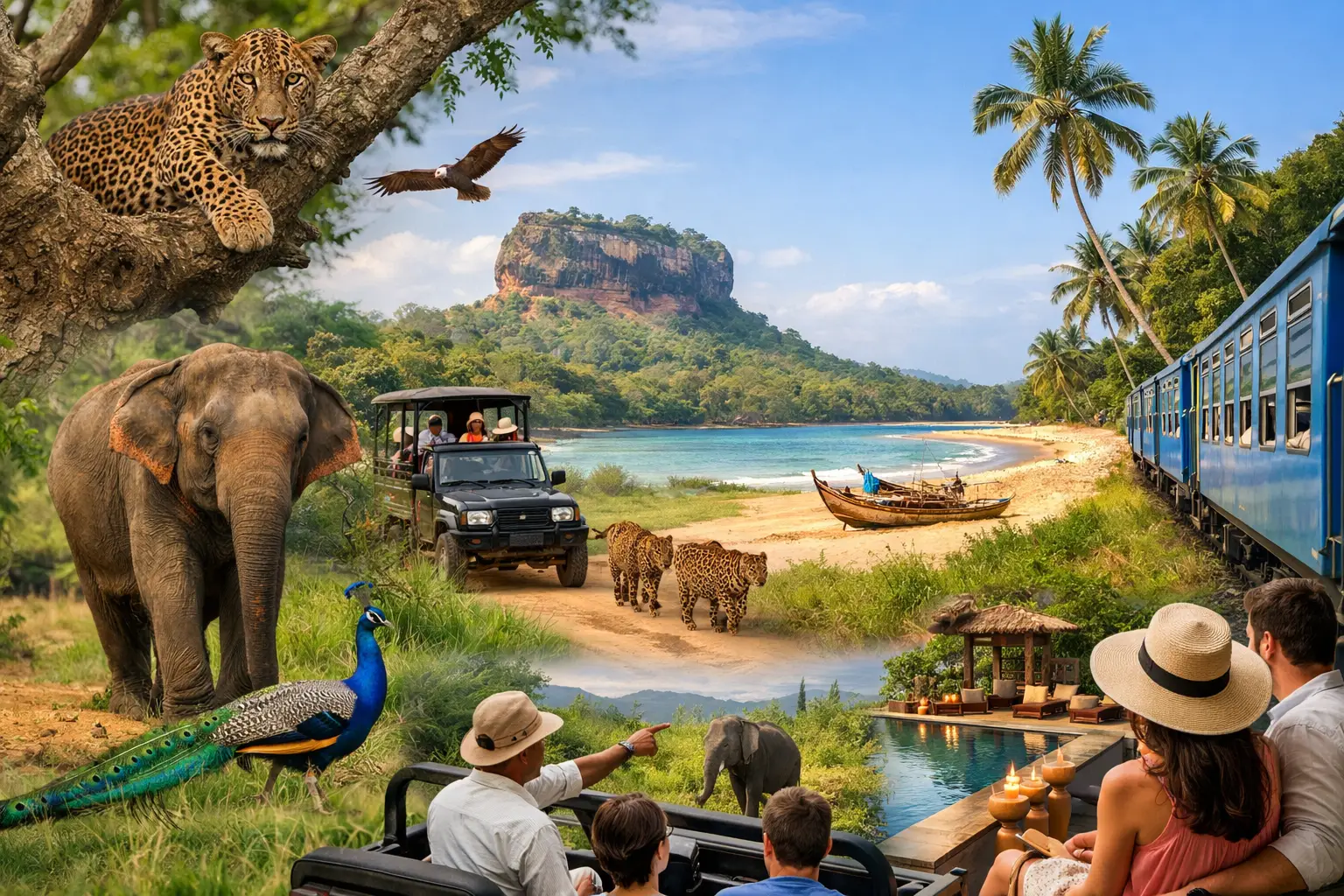
A leopard stepping through scrubland at dawn, a herd of elephants gathering near a reservoir, and blue whales moving through the Indian Ocean are all possible within one island journey. The best Sri Lanka wildlife experiences are not limited to a single national park. They can be woven naturally into a holiday that also includes misty hill country, ancient cities, golden beaches, and relaxed coastal stays.
Sri Lanka’s compact size makes this variety especially rewarding for travelers who want meaningful wildlife moments without spending their entire vacation in transit. Sightings always depend on season, weather, and nature itself, but thoughtful route planning helps you spend time in the right places and enjoy each landscape at an unhurried pace.
1. Search for Leopards in Yala National Park
Yala is one of Sri Lanka’s most celebrated wildlife destinations, known for its dry forests, open plains, lagoons, and rocky outcrops. Its Block 1 area is particularly famous for leopard sightings, making it a compelling choice for guests who hope to see one of Asia’s most elusive big cats in the wild.
A private jeep safari usually takes place early in the morning or later in the afternoon, when the light is softer and animals may be more active. Beyond leopards, look out for elephants, spotted deer, wild boar, crocodiles, peacocks, mongooses, and a remarkable variety of birds. Even when a leopard remains hidden, Yala feels alive with movement and color.
Yala works beautifully after a hill country stay in Ella or before a few restful days on the south coast. Choosing a lodge or hotel near the park can make early departures more comfortable and give you time to enjoy the area without rushing.
2. Watch Elephants in Udawalawe National Park
For many families, couples, and first-time visitors, Udawalawe offers one of the most memorable elephant experiences in Sri Lanka. The park’s broad grasslands, waterholes, and open views often make wildlife easier to observe than in denser forest environments.
Elephants are the main highlight, and it is possible to see mothers with calves, solitary males, and groups moving across the landscape. There are also water buffalo, deer, jackals, crocodiles, and many bird species to spot along the way. A respectful safari keeps a comfortable distance and allows animals to continue their natural behavior undisturbed.
Udawalawe is a practical choice for travelers moving between the southern coast, Yala, and the central highlands. It is especially suitable for guests who prefer a gentler wildlife day with good opportunities for photography and a varied landscape.
3. Experience the Elephant Gathering at Minneriya
The dry-season elephant gathering around Minneriya Reservoir is among Sri Lanka’s most distinctive natural spectacles. As water and grazing become concentrated around the reservoir, elephants from the surrounding region may gather along its exposed grasslands.
The number of animals varies from year to year, and the exact timing depends on rainfall and conditions. Still, the experience of seeing elephants spread across a wide reservoir edge can be extraordinary. Calves stay close to their mothers, older females guide family groups, and the changing evening light gives the scene a calm, cinematic quality.
Minneriya is conveniently located near Sigiriya, Dambulla, and the Cultural Triangle. It can be added after visiting Sigiriya Rock Fortress or before continuing toward Kandy, making it an easy way to combine heritage and wildlife in one well-paced itinerary.
4. Choose Wilpattu for a Quieter Safari Setting
Wilpattu National Park offers a different safari mood. Known for its natural lakes, called villus, and its quieter forest setting, it appeals to travelers who enjoy the sense of being deep in the wilderness.
Leopards live here, along with sloth bears, elephants, deer, crocodiles, and an excellent range of birdlife. Because the forest is denser and sightings can require more patience, Wilpattu is often best for travelers who appreciate the full safari experience rather than focusing on one animal alone.
Its location makes Wilpattu a rewarding addition to itineraries that include Anuradhapura, Negombo, or the northwest coast. A knowledgeable chauffeur-guide can help organize travel times and overnight stops so the journey feels comfortable from arrival through to your safari departure.
5. Look for Whales and Dolphins off Mirissa
Sri Lanka’s wildlife story continues beyond the national parks. The waters off Mirissa are known for seasonal whale and dolphin excursions, offering the chance to experience the Indian Ocean from an entirely different perspective.
Depending on conditions and the time of year, travelers may encounter spinner dolphins, bottlenose dolphins, and several whale species, including blue whales. As with any marine wildlife activity, a responsible operator that follows respectful viewing practices is essential. Wildlife should never be chased, crowded, or treated as a guaranteed performance.
Morning trips can be a lovely addition to a south-coast stay in Mirissa, Weligama, or Galle. Leave space in your itinerary afterward for a beach lunch, a relaxed afternoon, or time by the pool, particularly if you are traveling with children or prefer a slower holiday rhythm.
6. Walk Beneath the Canopy in Sinharaja Rainforest
Sinharaja Forest Reserve is one of the island’s richest settings for birdwatchers, nature lovers, and guests who enjoy walking through lush tropical landscapes. The forest feels completely different from the dry-zone parks, with tall trees, winding trails, misty foliage, and the steady sounds of insects and birds.
A guided walk is the best way to understand what you are seeing. Local naturalists can point out endemic birds, colorful butterflies, reptiles, frogs, and remarkable plant life that can be easy to miss without trained eyes. You may also see monkeys moving through the canopy or hear birds calling from high above.
This experience is less about checking off a single iconic animal and more about slowing down. Good footwear, rain protection, and a willingness to embrace the rainforest’s changing conditions will make the visit more enjoyable.
7. Explore Birdlife in Bundala National Park
Bundala National Park is a wonderful choice for travelers interested in birds, wetlands, and coastal scenery. Its lagoons, salt pans, scrubland, and shoreline attract resident and migratory birds, creating an experience that feels peaceful and varied.
Flamingos are a well-known seasonal attraction, while pelicans, storks, herons, eagles, and kingfishers add to the appeal. The park also supports elephants, crocodiles, and smaller mammals, so a safari here offers more than birdwatching alone.
Bundala pairs well with Yala for travelers who have time for more than one safari. Yala brings the anticipation of large mammals, while Bundala offers quieter wetland landscapes and a chance to appreciate Sri Lanka’s remarkable bird diversity.
8. Meet Wild Elephants from the Water in Gal Oya
Gal Oya National Park offers one of Sri Lanka’s more unusual wildlife experiences: a boat safari on Senanayake Samudraya, the country’s largest reservoir. Rather than traveling only by jeep, you can watch islands, forest edges, waterbirds, and occasionally elephants from the water.
The park is often chosen by travelers who want a more remote, nature-focused stay. Its appeal lies in the atmosphere as much as the wildlife. The sounds are softer, the scenery is expansive, and the experience feels refreshingly removed from busier travel routes.
Gal Oya requires more travel time than parks close to the south coast or Cultural Triangle, so it is best suited to longer customized journeys. For the right traveler, that extra time can be part of the reward.
How to Plan a Wildlife Holiday That Feels Comfortable
The most satisfying wildlife itineraries balance early starts with time to rest. Safaris often begin before sunrise or later in the afternoon, so choose overnight stays close to the park when possible. This reduces long road journeys and gives you more time to enjoy breakfast, refresh, and settle into your surroundings.
It also helps to match the park to your interests. Choose Yala or Wilpattu for the possibility of leopards, Udawalawe or Minneriya for elephants, Bundala for birds, Sinharaja for rainforest walks, and Mirissa for marine wildlife. If you have a longer trip, combine two different habitats rather than repeating similar safaris.
A chauffeur-guided itinerary can make these connections much easier, particularly when you are moving between Sigiriya, Kandy, Ella, Yala, and the coast. Visit My Sri Lanka can help shape a route around your travel dates, preferred comfort level, and the experiences that matter most to you.
Bring neutral-colored clothing, sunscreen, a hat, binoculars if you have them, and a camera with spare battery power. Most importantly, arrive with patience. The finest wildlife moments are often the unexpected ones: an elephant emerging from the trees, a hornbill crossing a quiet road, or a distant whale breaking the ocean surface. Give Sri Lanka’s wild places the time they deserve, and let the journey unfold naturally.


